
Scales and keys.
Scales are the foundations for chords and songs, for all things piano.
Think of the scales as the foundation of most music you hear. Whether it’s pop, rock, jazz, classical, or hip-hop, this scale helps shape melodies and harmonies. They are like musical recipes that keep everything sounding familiar and balanced.
Think of music as a language, and scales or keys as its dialects — each with its own character and emotional tone.
- There are two main types of scales: Major (bright, happy) and Minor (dark, sad).
- Every note (including sharps and flats) has both a major and minor scale, totalling 12 of each.
- Each scale contains a different number of sharps and flats.
When composing, musicians choose:
- The key (which scale to use),
- Whether the key is major or minor, depending on the mood of the song they are composing
- Which note of the scale to write it on (different notes have distinctive tones to them. e.g. which affects the tone (e.g. B♭ Major = rich, F♯ Major = bright).
They also consider the instrument’s range and how playable the key is — more sharps/flats often mean greater complexity.
C Major is one of the easiest keys to play — no sharps, no flats. In contrast, C♯ Major, with its seven sharps, can look overwhelming!
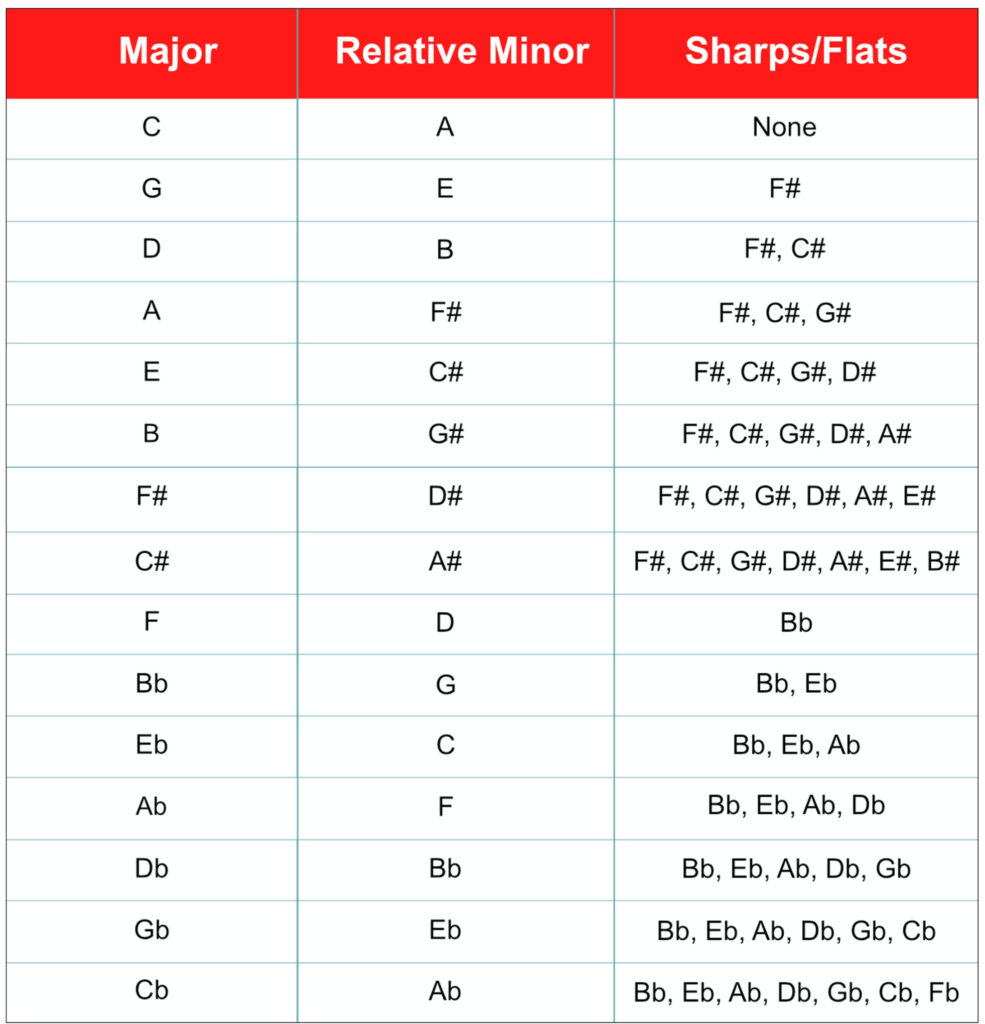
A helpful shortcut in music theory is that each major scale shares its key signature with a matching minor scale — they’re known as relative major and relative minor. Think of them as musical siblings:
For example, A Minor is the relative minor of C Major, and you can find it by counting three semitones down from the major note.
The C Scale.
The C major scale is one of the most important and widely used scales in music. It’s a great place to start because it has no sharps or flats—meaning you only play the white keys on the keyboard.
This exercise strengthens finger agility, note recognition, and overall technique.
Playing the scale of C
Place your right hand on the keyboard with your thumb (1st finger) on Middle C and the rest of your fingers on the next notes, as you did for the five-finger scale.
- Play C → D → E, keeping your 3rd finger on E.
- Now, bring your thumb under and smoothly shift your hand around to reset for the next notes.
- To come back down, keep your thumb on F, then bring your 3rd finger over to E to transition back.
Now for your left hand:
- Place your pinkie (finger 5) on C below Middle C.
- Play up the scale, keeping your thumb (finger 1) on G, then cross your 3rd finger over to A.
- On the way back down, keep your 3rd finger on A, then tuck your thumb under to smoothly transition back to G.
Practice this with each hand to build confidence and once you feel comfortable, bring in the metronome at 50–60 bpm.
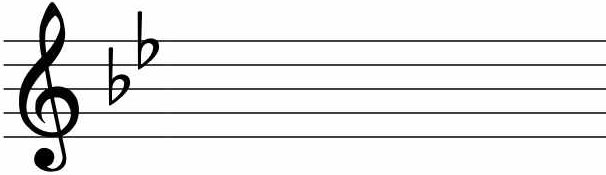
Now, writing music in keys like C♯ Major could clutter the page with sharp symbols. That’s where key signatures come in — they tidy things up by placing sharps or flats at the beginning of the staff, keeping the music clean and readable.
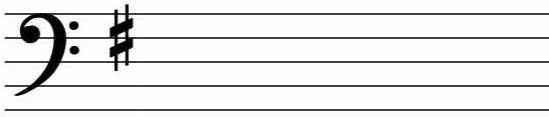
Key signatures appear in the Bass Clef too. Here’s G Major/E Minor in the Bass Clef…
Changing Key
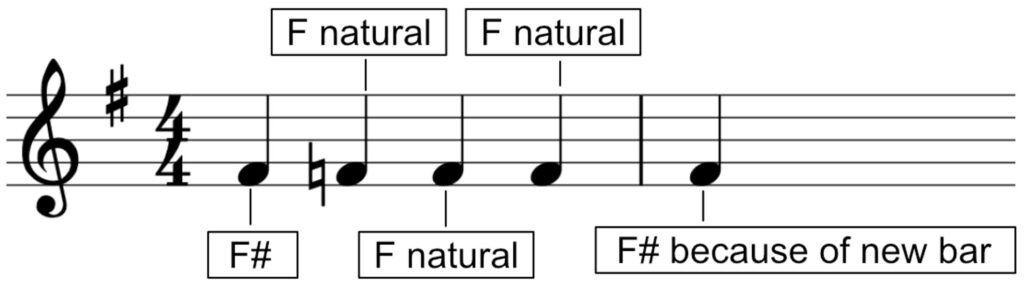
Composers don’t have to stick to the key signature the whole time. If they want to change a note — make it higher or lower — they use a sharp (♯) or flat (♭) symbol before the note. This change lasts for the rest of that bar. To cancel it, they use a natural (♮) sign or just move to the next bar.
These extra symbols are called accidentals, and they help add variety and expression to the music.
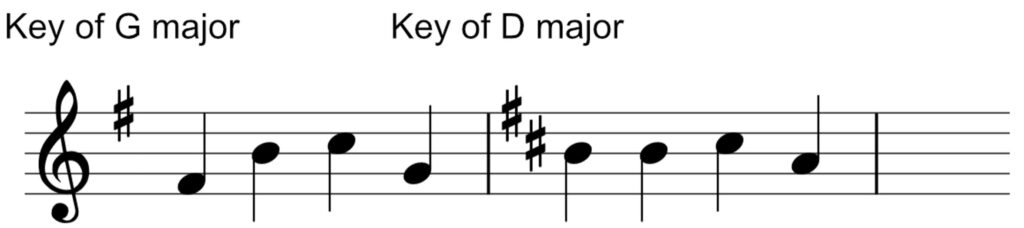
A composer can change the key during a piece by adding a new key signature at the start of a bar. From that point on, the music follows the new key — until another change is made. This lets the music shift in mood or style as it goes.
This may have been a challenging, but we’ve made great progress! Take a moment to reflect on what you’ve learned—it’ll help everything sink in. If you’re eager to dive into the next lesson, that’s fantastic! Just be sure you’re comfortable with the following before moving forward…
- Sharps and Flats
- Staves
- Ledger Lines
- Clefs
- Note names on Treble and Bass Clefs
- Sharps and flats
- Middle C
- Keys/scales
- Key signatures