Key signatures
Key signatures appear at the start of a stave to indicate the key of a piece and which notes should be sharpened or flattened. Sharp key signatures use **# symbols** on specific lines or spaces to mark the notes that need to be raised. Here’s an example to illustrate…
This key signature represents G Major or E Minor. Notice the # symbol on the top line (F) of the stave? That means every F in the music should be played as F# instead.
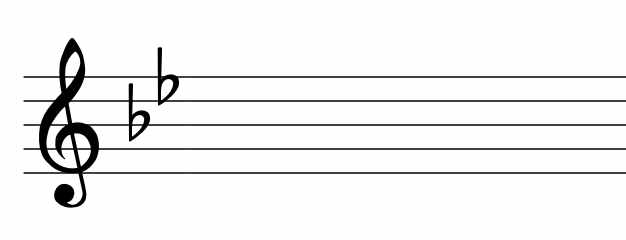
Flat key signatures use ♭ symbols to indicate which notes should be lowered. In this example…
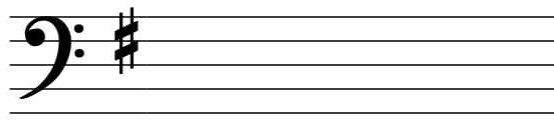
Key signatures appear in the Bass Clef too. Here’s G Major/E Minor in the Bass Clef…
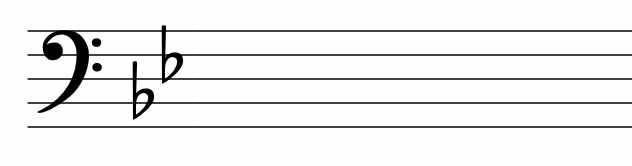
And here is Bb Major/G Minor in the Bass Clef….
This first lesson was challenging, but we’ve made great progress! Take a moment to reflect on what you’ve learned—it’ll help everything sink in. If you’re eager to dive into lesson 2, that’s fantastic! Just be sure you’re comfortable with the following before moving forward…
- Sharps and Flats
- Staves
- Ledger Lines
- Clefs
- Note names on Treble and Bass Clefs
- Sharps and flats
- Middle C
- Keys/scales
- Key signatures