Dynamics
What are dynamics?
Dynamics (noun) = the variation and gradation in the volume of musical sound
As a performer, one of the first things I need to ask is: how loud should I play? Composers show this in the sheet music using letters or words under the stave—these are called dynamic markings. For example, if you see a p, it stands for piano (an Italian word pronounced “pee-ar-no”), which means play quietly.
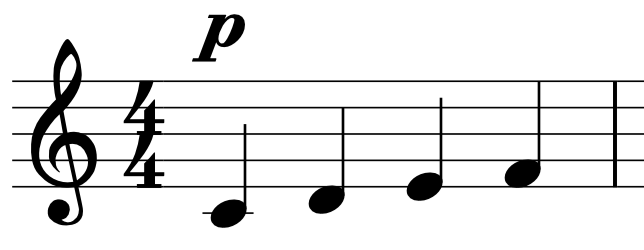
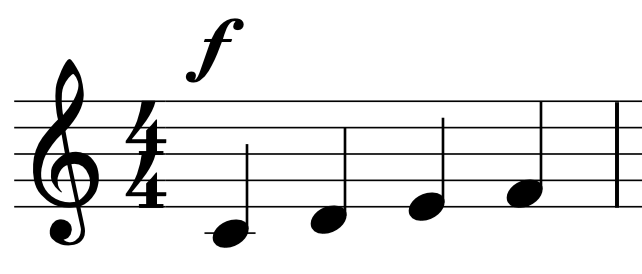
On the other hand, the following scale should be played loudly as f is short for forté which means loud.
Dynamic markings can change as the music goes on. In this example, the first bar should be played loudly, and the second bar should be played quietly.
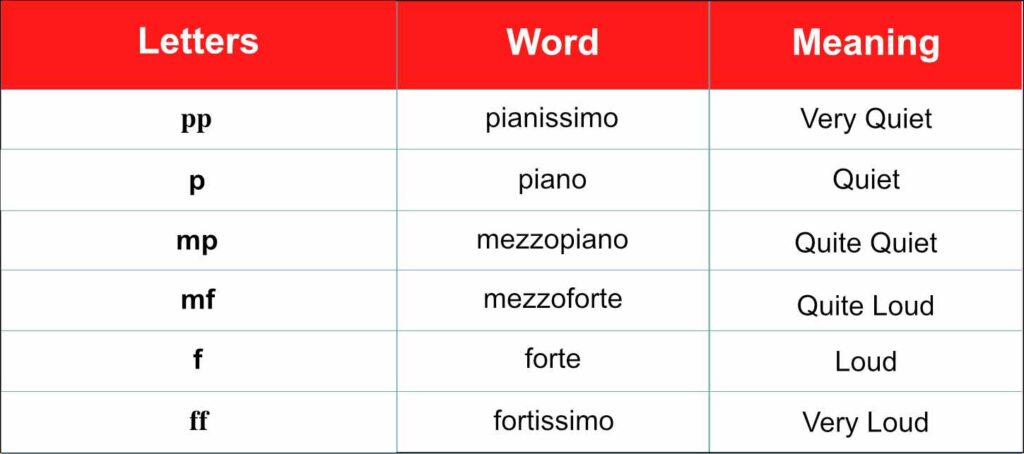
This table shows a list of the most common letters/words used to express volume/dynamics
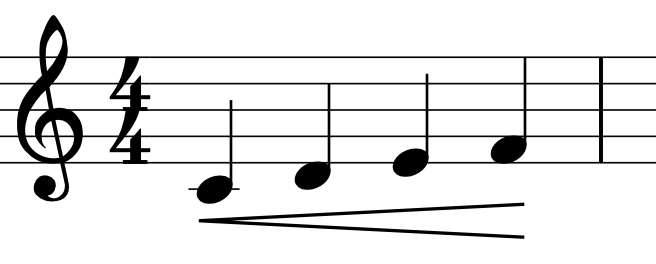
Next, we ask about dynamics: should the performance increase or decrease in volume? Such changes are shown under the stave. This scale, for example, is meant to grow steadily louder, which is called a crescendo (Cresc.).
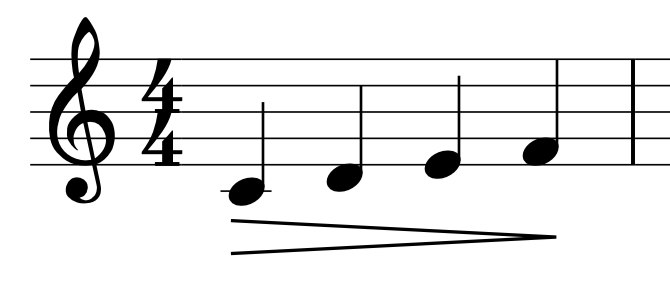
On the other hand, this scale is marked to grow steadily softer, known as a diminuendo (Dim.).
Harmony
What is harmony?
Harmony (noun) = when 2 or more notes are played together
In the early days, music was written for just one instrument or one voice, with no backing parts. This type of music is called monophonic music, which simply means ‘one sound.’ Today, most of the music we listen to has several notes being played at the same time. That’s why it’s important to learn how to read more than one note together.
So far, you’ve learned how to read a single line of music. Now we’re going to see how sheet music shows when more than one note should be played at once. This might feel like a bigger challenge, but don’t worry—it’s something you can get the hang of with practice.
The Basic Idea
The way sheet music shows notes that are played together is actually very simple. The tricky part is training your hands or voice to do it smoothly. With a bit of practice, you’ll find it becomes much easier
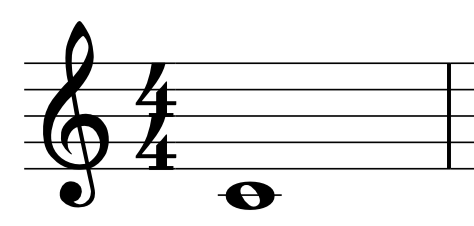
This symbol indicates Middle C should be played.
This shows that a Middle C and the E above it should be played at the same time.
Multi‑note instruments Some instruments, like the flute, clarinet, or trumpet, can only play one note at a time. Others, such as the piano or guitar, are able to play several notes together. When music is written for these multi‑note instruments, the sheet music shows different notes stacked so you know they should be played at the same time.
Piano music can seem overwhelming. The page is full of lines, dots, and symbols that may look confusing. But don’t worry—the notation is built from the same basics you’ve already learned. The only difference is that piano players use two hands and up to ten fingers, which means they can play many notes at once. That’s why the music looks busier.
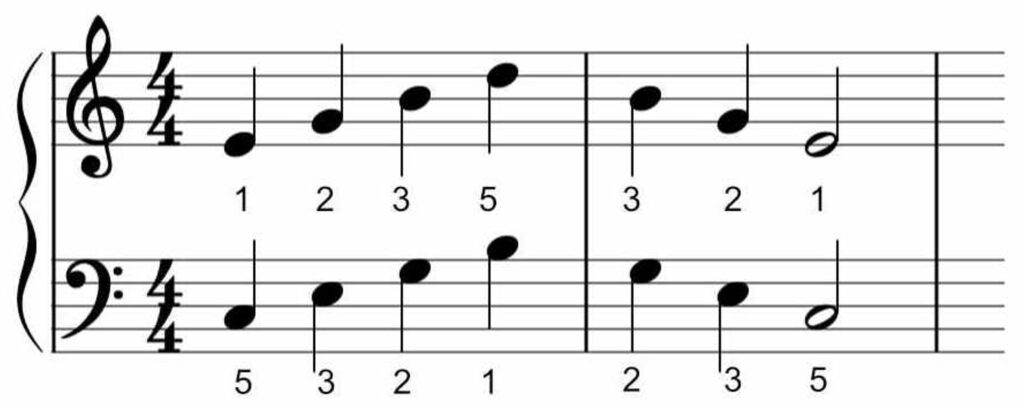
Piano music is usually written on two staves. Most often (though not always), the top stave uses the Treble Clef and shows the notes for the right hand. The bottom stave uses the Bass Clef and shows the notes for the left hand. Keeping this in mind makes practice easier—you can focus on one hand at a time, gradually building confidence before putting both hands together.

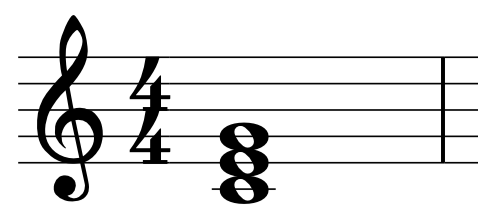
And this shows that the C, E and the G above should be played at the same time.