2. Starting to read music
Musical notation is a way composers express to musicians how to play a piece of music through both pitch and rhythm.
Pitch
Pitch is how high or low a note is. Play a high note on a piano, then a low one, and most listeners will hear the difference. Instruments vary in their pitch range—flutes play high, bass guitars play low, and pianos cover a wide range.
The first key function of sheet music is to show how high or low a note is. Master this, and you’re already on your way to reading music.
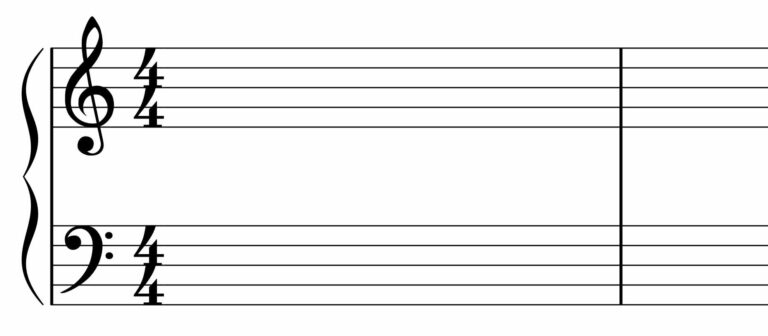
The grand staff or stave.
Music is written on a stave which consists of five lines. Notes can be placed either in the spaces or on the lines.
Blank Stave
Stave with notes
WHAT IS A CLEF?
A clef is a symbol used at the beginning of a musical staff to tell you which letter name goes with which line or space.
There are several different kinds of clefs including C clef and the rhythm clef however we’ll only be learning treble clef and bass clef.
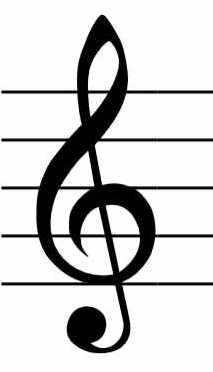
Treble Clef
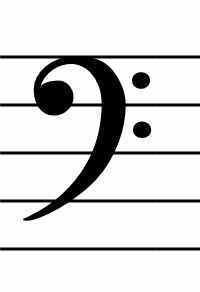
Bass Clef
The Grand Stave with Treble and Bass Stave.
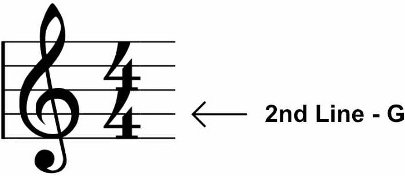
A clef points to one line of the staff and names that line.
The treble clef is also known as the G clef because it marks the location of the note G on the staff.
The inner loop circles the second line and gives the name G.
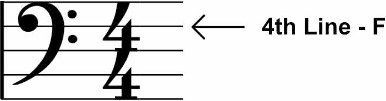
The bass clef is also known as the F clef because it marks the location of the note F on the staff.
Musical notes are separated by vertical lines called bar lines.
Notes moving up or down from Middle C are shown by placing them on successive lines and spaces.
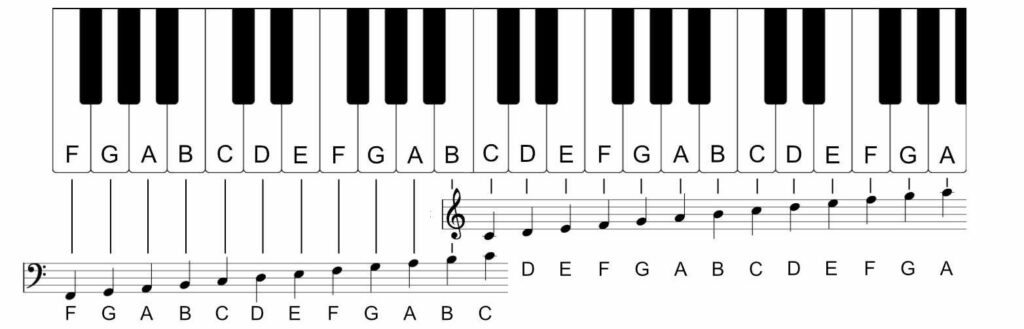
Here is an example showing the relationship between notes on the keyboard and notes on both on treble and clefs
The lines and spaces represent the white notes going up from E.
The first line on the bottom is E above middle C.
The next space is F and so on.
Mnemonics for the clefs.
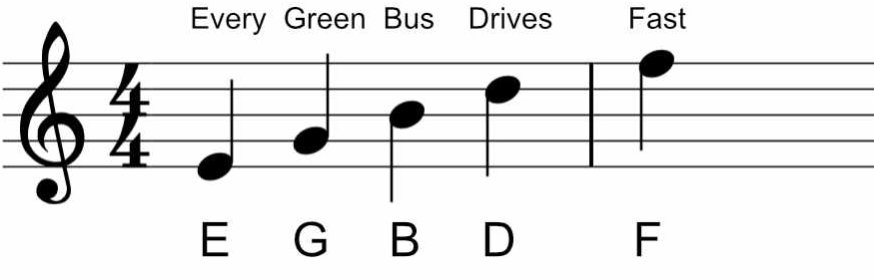
Mnemonics (pronounced nuh·MON·iks) are a great way to remember the notes on the on the stave. For the lines on the treble clef, you can use “Every Green Bus Drives Fast”
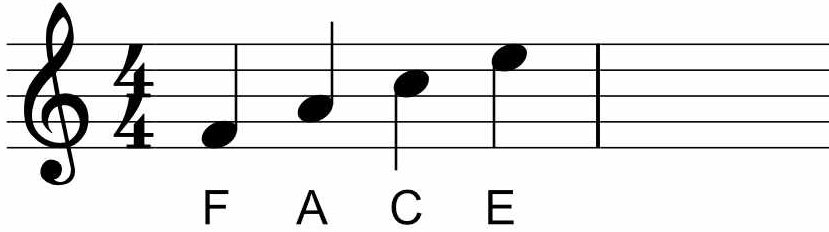
For the spaces on the treble clef, simply remember “FACE”
Since these letters spell a familiar word, it’s easy to recall that the spaces on the staff.
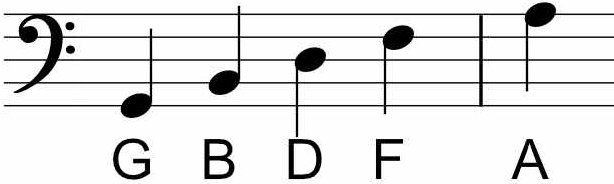
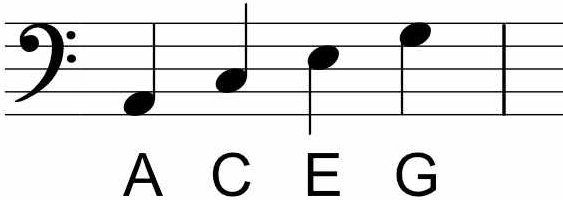
The Bass Clef
In the treble clef middle C is on the first ledger line below the stave.
In the bass clef middle C is on the first ledger line above the stave.
2 mnemonics for left hand:
Good Boys Deserve Fine Apples.
All Cows Eat Grass.
Feel free to make up your own mnemonics for both clefs!
EXERCISE
Right hand
Play through the following exercise. Every time you hit a note say its name. Go through the whole page and play all the notes. Use your index finger (finger 2) for now.
Now play the following exercise. Start with any 2 fingers you want for the first few times.
Left Hand
Play each note naming it as you go. Use the finger positions. Thumb 1 etc. Outwards from the thumb.
Learn the treble and bass clef notes until you can recognize them instantly — this skill is essential for tackling complex pieces without hesitation.
Click here to download the PDF for this lesson